Problem Solving with Algorithms and Data Structures using Python
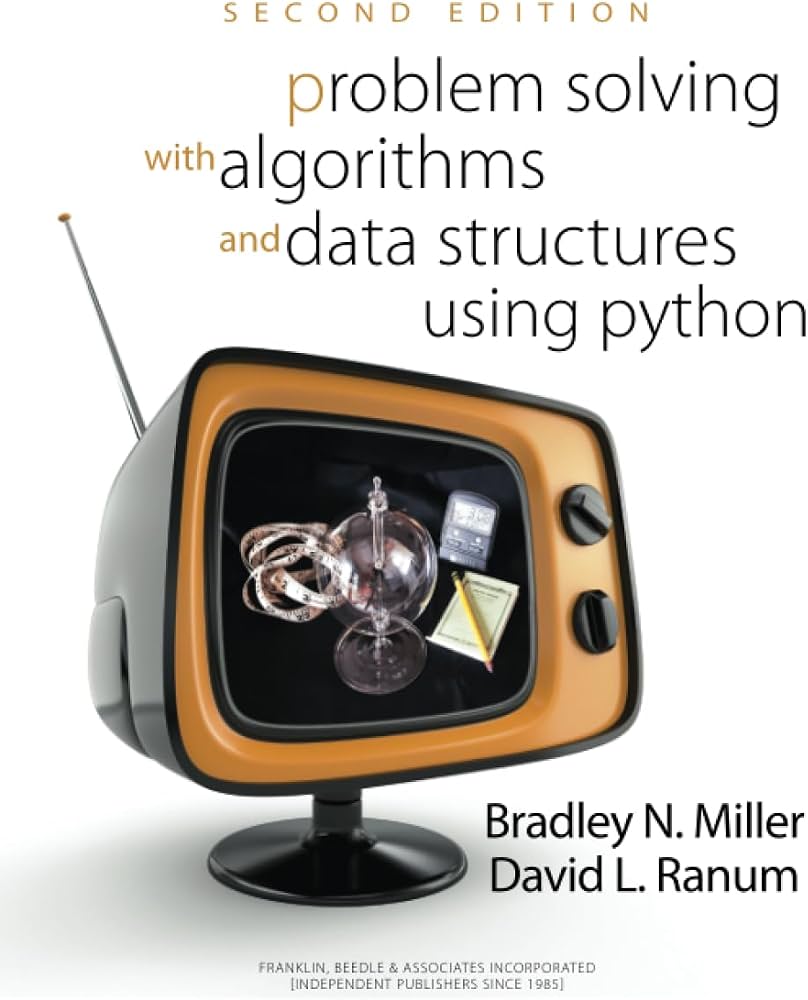
“Problem Solving with Algorithms and Data Structures using Python” by Miller and Ranum is arguably one of the most approachable and effective entry points into computer science fundamentals. For self-taught developers, data scientists transitioning into software engineering, or anyone who finds traditional algorithmic textbooks overly dry and intimidating, this book is an absolute lifesaver.
What sets this book apart is its core philosophy: it teaches you how to think computationally. It doesn’t just throw raw code at you; it breaks down the “why” and “how” of problem-solving before introducing the specific data structures. The authors use Python not merely as an instructional tool, but in a way that feels genuinely “Pythonic,” making the implementations of complex structures feel natural and intuitive for those already familiar with the language.
The book begins with a gentle introduction to Python basics and Big-O notation, ensuring the reader understands how to evaluate the performance and efficiency of their code. From there, it systematically covers classic data structures: stacks, queues, deques, linked lists, recursion, trees, and graphs. Each chapter is structured logically, starting with the Abstract Data Type (ADT) concept, followed by a concrete Python implementation, and finishing with real-world applications and practical exercises.
A massive highlight of this resource is its availability as an interactive online textbook via Runestone Academy. This format allows you to run code snippets, visualize algorithms executing step-by-step, and answer practice questions directly in your browser. This active, hands-on learning approach reinforces complex concepts far better than passive reading ever could.
While it might not replace the encyclopedic depth of heavier academic texts for advanced university study, it is the perfect stepping stone. It provides exactly the right amount of rigor to prepare you for technical interviews, coding challenges, or more complex architectural decisions in your daily engineering work. It is a brilliant, practical, and highly engaging foundation for any Python developer.